

In the last week of March 1306, a young woman took the best horses from her husband’s stable without asking him and rode hard for Scone.
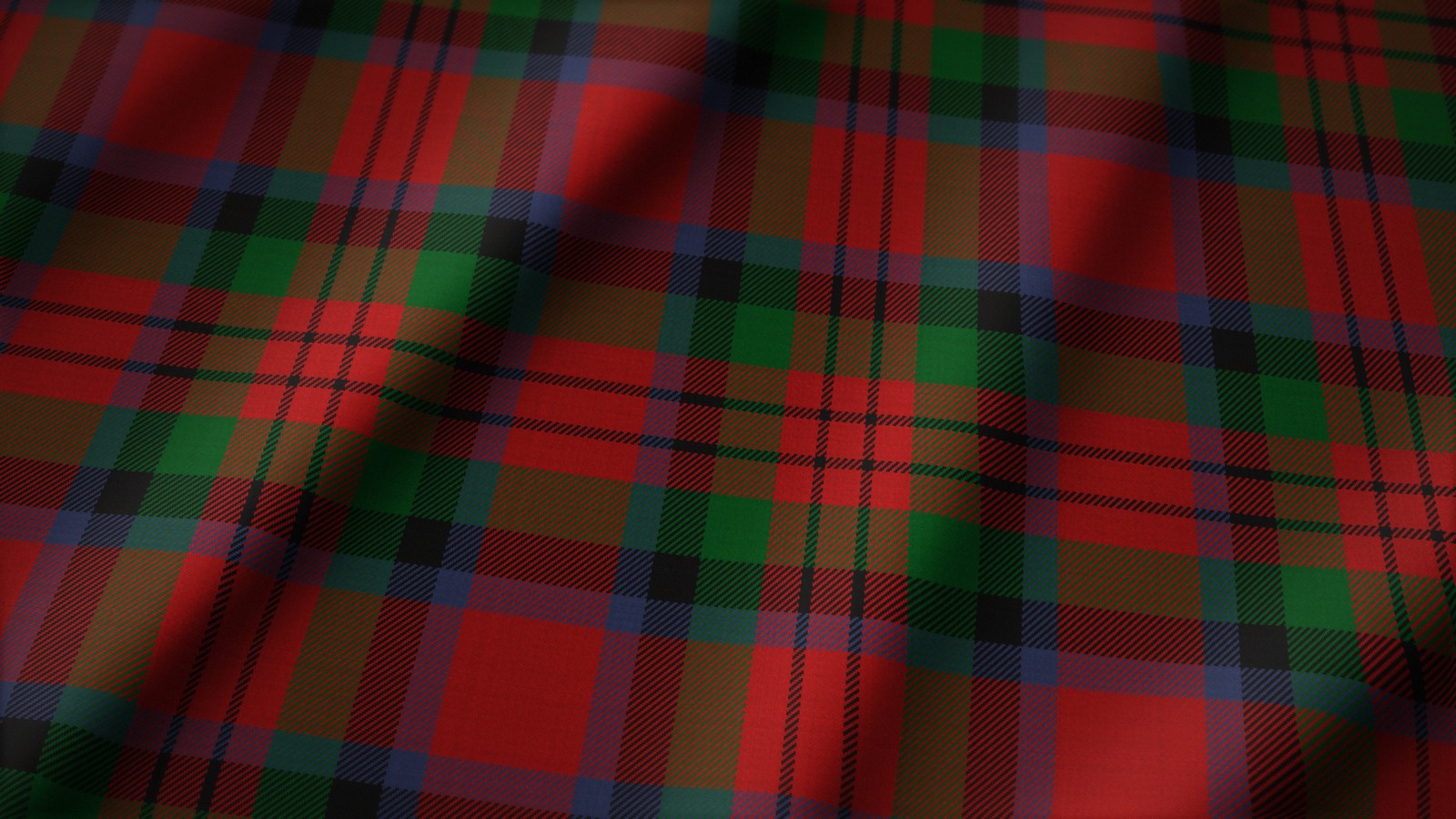
Her name was Isabella. By marriage she was Countess of Buchan, wife of one of the most powerful earls in Scotland. By birth she was a MacDuff, daughter of the Earl of Fife, and it was the second of those facts that put her on the road. Six weeks earlier Robert Bruce had stabbed his rival John Comyn in a church at Dumfries and made his bid for the throne of Scotland. Now he was to be crowned. Isabella’s husband was a Comyn, the dead man’s cousin, and Bruce’s sworn enemy. She went anyway. Her family’s name lives on in the deep red MacDuff tartan.
She arrived a day too late. The ceremony had been held on 25 March, with bishops and earls and a hastily made circlet of gold. But everyone present knew there was something missing, and when the countess rode in, they did it again. On 27 March 1306, Palm Sunday, Isabella MacDuff placed the crown on Robert Bruce’s head with her own hands.
To understand why a second coronation was thought necessary, and why she would pay so terribly for it, you have to know who the MacDuffs were.
The law of Clan MacDuff
For some three centuries the Earls of Fife stood first among the nobles of Scotland. They claimed descent from the old royal line of the Scots and Picts, and whether or not that was true, the kings treated them as if it were. Later writers summed up their standing in three hereditary privileges, which they called the Law of Clan MacDuff.
The first was the right to lead the vanguard of the Scottish army in battle. The second was a right of sanctuary: any kinsman of the earl who had killed a man in hot blood could claim protection if he reached a certain stone cross on the hill above Newburgh, in Fife, and paid a fine in cattle. The broken base of that cross is still there. The third privilege was the greatest. At Scone, it was the Earl of Fife, and nobody else, who led the new king to the Stone of Destiny and set him on it. Without a MacDuff, a king of Scots was not properly made.
In 1306 the Earl of Fife was a boy of about sixteen, Isabella’s brother, and he was being brought up at the English court as a ward of King Edward I. He could not come. Bruce, who had seized the throne by murder and needed every scrap of legitimacy he could find, was crowned without him. When the earl’s sister appeared at the gate, she was the answer to a prayer.
Most people know the name from another story entirely. Shakespeare’s Macduff, Thane of Fife, who was “from his mother’s womb untimely ripp’d” and who kills Macbeth in the last act, comes from the chronicles the playwright used. Historians doubt any such man existed. The real Macbeth was killed in 1057 by the army of Malcolm Canmore. But the legend tells you how the family was seen: the kingmakers, the ones who decide.
Berwick
Bruce’s first year as king was a disaster. He was beaten at Methven in June and became a fugitive. He sent the women of his household north for safety: his queen, his daughter, his sisters, and the Countess of Buchan, who could hardly go home. They got as far as the shrine of St Duthac at Tain, a recognised sanctuary. The Earl of Ross broke it, seized them, and handed them over to the English.
Edward I was sixty-seven and dying, and in no mood for mercy. His written order survives. For the Countess of Buchan, a cage was to be built of timber and iron lattice, in one of the turrets of Berwick Castle. She was to be kept in it and not allowed out. She was to be served by English women only. No Scot, man or woman, was to be allowed to speak to her. Tradition says the cage was hung from the walls so that passers-by could look at her. Bruce’s sister Mary was put in another at Roxburgh.
Isabella was in the cage for four years. In 1310 she was moved to a house of Carmelite friars in the same town. In 1313 she was transferred to the keeping of a knight in the English king’s service. After that, nothing. When Bruce won at Bannockburn in 1314 and his queen, his daughter and his sister came home in exchange for English prisoners, the countess who had crowned him was not among them. It is assumed that she was dead.
She has no grave and no portrait. But the family she came from is remembered in a bold red tartan, and there is a directness about that cloth that seems right.
The red sett
The old earldom passed to the Stewarts in the fourteenth century. The name rose again far to the north with the Duffs of Banffshire, who were made Earls Fife in 1759. The second earl renamed a fishing village on the Moray Firth after the family in 1783, which is why there is a town called Macduff. In 1889 the sixth earl married a granddaughter of Queen Victoria and became Duke of Fife. The clan has no recognised chief today.
Its tartan has far better paperwork than most. The pattern was recorded by the weavers William Wilson & Sons of Bannockburn some time between the 1780s and 1819, and a close variant was collected by the Highland Society of London around 1815 to 1820, when it was gathering samples certified by the chiefs. In 1850 two brothers named Smith, publishing a book of what they called authenticated tartans, were refreshingly honest about their source. Their authority for this one, they wrote, was “use and wont.” It was “universally worn in the North as MacDuff.” At a recent Braemar Gathering, held in the Queen’s honour, the many retainers of General Duff had all turned out in it. The same red sett now turns up well beyond the Braemar field, in a scotch plaid flannel shirt as well as in a kilt.
It is a deep red cloth carrying broad bands of dark blue and green, edged and divided by black, with fine black lines through the red. Anyone who knows Royal Stewart will see the likeness. The standard description is that the two are very similar, except that MacDuff has none of the thin yellow and white lines that make Royal Stewart glitter. The result is calmer and richer, closer to an old Turkish rug than a shortbread tin.
There are relations: a Hunting MacDuff in brown and green, a Dress version with white, and a quite different pattern from a Victorian book that is generally thought to have been invented by its authors. When people say MacDuff tartan they mean the red one. Retailers list it with its variants and make it up as kilts, skirts, waistcoats and scarves, or sell it by the yard. The surname Duff and sept names including Fife, Fyfe, Spence and Wemyss are traditionally connected with it.
Vermont, late October
Tom Fyfe is fifty-eight and heats his house with wood. From the first frost until April he can be found most Saturdays behind the barn with a splitting maul, wearing one of a rotating collection of red and black checked shirts, each more faded than the last.
That check has a name, buffalo plaid, and it has been the uniform of the American north woods since a Pennsylvania mill began weaving it around 1850. It is about the simplest pattern a loom can make: two colours, equal squares. There is a tall tale that it began as the red and black check of Rob Roy MacGregor, carried west by a Scottish trader who swapped blankets with the Sioux. Nobody has ever proved it. What is certainly true is that Americans call the whole family of patterns plaid, a Gaelic word for a Highland blanket, and that nineteenth-century mills sold their checked shirtings as Scotch plaids because everybody understood where the idea had come from.
Tom’s daughter Isobel is twenty-six and halfway through a doctorate in medieval history. Last spring she wrote a chapter on the women of the Bruce household and spent a month with the countess in the cage. At some point it occurred to her that Fyfe is Fife, that Fife is MacDuff, and that her father had been wearing a poor cousin of his own family’s cloth for forty years without knowing it.
She went looking. A normal shirt company could not help her, since it had no reason to keep clan patterns. A Highland outfitter could. She found one making scotch plaid flannel and other men’s tartan shirts from real woven tartan instead of printed check, so that both faces of the cloth match and the pattern cannot rub off, in the same named setts the firm wove for kilts, and cut to the customer’s chest and sleeve. She got her mother to measure him on a pretext.
The shirt arrived in the second week of October. Deep red, with bands of navy and bottle green and fine black lines. Beside it, his old buffalo checks looked like a child’s drawing of a shirt.
Tom is not a demonstrative man. He put it on, rolled the cuffs once, and saw that the inside matched the outside. He noticed that it sat square across his shoulders and that the lines ran level, which off-the-rack plaid never quite does on him. He wore it to split wood. He wore it to the hardware store, over a grey T-shirt with jeans and boots, and again under a canvas jacket to the town bonfire. Isobel passed on the two pieces of advice she had been given. Nothing else patterned with it, ever. Cold wash, hang to dry, keep it away from the dryer.
At Thanksgiving she told the whole table about the stolen horses, the second coronation and the cage at Berwick. Her uncle said it was a hell of a thing. Her father said nothing for a while.
“So that’s us,” he said eventually.
“That’s us.”
He looked down at his sleeve. “She’d have been cold, in that cage. Four winters.” He smoothed the cuff flat. “Good thick shirt like this, she’d have been glad of it.”
What is left
Isabella MacDuff did one thing that history noticed. She rode to Scone against her husband’s will and crowned a king because it was her family’s right and there was nobody else to do it, and she must have had a fair idea what it might cost. The record loses sight of her in 1313.
The family name went north, became a town, a dukedom and a tartan, and then went everywhere. It is on the backs of pipers at Braemar. It is also on the back of a man splitting maple behind a barn in Vermont, who did not know until this year that he had anything to do with any of it, and who now thinks about a countess whenever he buttons his cuffs.