

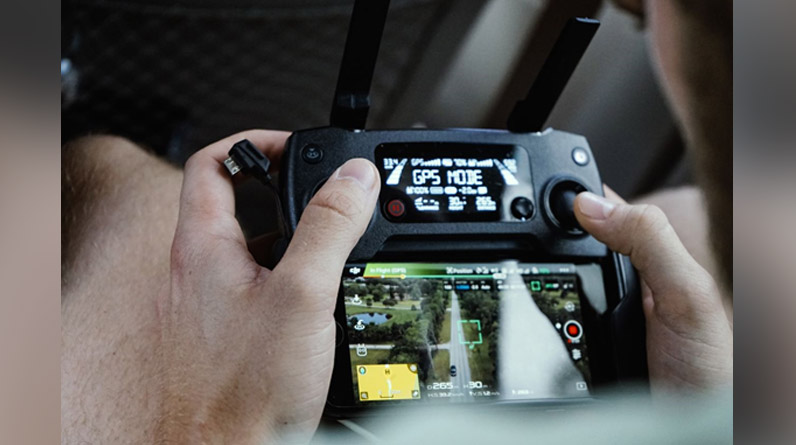
GPS trackers have become smaller, cheaper and more accessible, but the technology behind them is about to face a new set of demands. As tracking devices become smarter and more connected, manufacturers will need more capable processors to deliver the features that consumers and businesses increasingly expect.
GPS Tracking Is Becoming More Than Location Monitoring
For years, the main purpose of a GPS tracker was straightforward: identify an object’s location and send that information to a user. Whether attached to a vehicle, placed inside a delivery package or worn by a pet, the device generally performed a limited number of tasks.
That is changing. Modern trackers can combine satellite positioning with mobile networks, motion sensors and sophisticated software to provide a much clearer picture of what is happening around them.
This development reflects a wider transformation in the semiconductor industry. Investors following the nvidia share price forecast 2030, for example, are considering how growing demand for advanced computing could influence chip manufacturers over the coming years.
Although GPS trackers typically use much smaller and less powerful processors than those found in AI servers, they face a similar challenge: processing increasingly complex information quickly and efficiently.
More Accurate Location Data Requires Better Processing
Anyone who has used satellite navigation in a busy city knows that GPS signals are not always reliable. Tall buildings, underground car parks and tunnels can interfere with positioning, sometimes making a vehicle appear to be travelling along the wrong road.
The next generation of trackers will need to address these problems.
One approach involves combining GPS information with data from accelerometers, gyroscopes and other sensors. Rather than relying entirely on satellite signals, the device can estimate movement and direction when reception becomes unreliable.
However, combining information from several sources requires additional processing power.
More capable chips could allow trackers to analyse this data continuously, improving accuracy without depending entirely on external servers. This would be particularly valuable for delivery companies, emergency services and businesses managing large vehicle fleets.
Artificial Intelligence Could Transform Tracking Devices
Artificial intelligence is gradually finding its way into everyday electronics, and GPS trackers are unlikely to be an exception.
Consider a tracker installed in a commercial vehicle. Instead of simply reporting its location, it could analyse driving patterns and identify unusual behaviour.
Sudden changes in speed, unexpected stops or movements outside normal operating hours might trigger an alert.
For pet owners, a smarter tracker could potentially distinguish between ordinary activity and unusual movement patterns. Similar technology could help monitor expensive equipment or identify suspicious activity around parked vehicles.
These features require processors capable of handling more than basic location calculations.
Importantly, not every AI function needs a powerful graphics processor. Many tracking applications could use specialised low-power chips designed to perform specific machine-learning tasks.
The challenge for manufacturers will be providing these capabilities without making devices excessively expensive or energy-intensive.
Battery Life Remains the Biggest Challenge
There is one obvious problem with putting more powerful processors inside GPS trackers: electricity.
Many tracking devices operate on small batteries, sometimes for weeks or months without being recharged. Increasing processing performance could significantly reduce that operating time unless manufacturers find ways to improve efficiency.
This is why chip design matters as much as raw computing power.
Future processors may use dedicated circuits for particular tasks, allowing other components to remain inactive until needed. A tracker might perform basic location checks using minimal energy, activating more demanding functions only when it detects unusual movement.
Smarter power management could also reduce unnecessary satellite connections and data transmissions.
For consumers, the result could be devices that offer additional features without requiring daily charging.
Faster Connectivity Will Create New Opportunities
Connectivity is another reason GPS trackers will need better hardware.
As mobile networks develop, tracking devices can exchange information more frequently and support applications that require faster responses.
For example, logistics companies could monitor temperature-sensitive deliveries while simultaneously tracking location, movement and environmental conditions.
Construction businesses might use connected trackers to monitor machinery across several sites, receiving notifications when equipment moves unexpectedly.
Processing some information locally would also reduce the amount of data transmitted, potentially lowering communication costs.
However, these improvements will depend on efficient integration between processors, wireless components and tracking software.
What Comes Next for GPS Tracking Technology?
The next major improvement in GPS tracking may not be a dramatic change in appearance. A tracker purchased five years from now could look remarkably similar to one available today.
The difference will be what happens inside it.
More advanced semiconductor designs could help devices understand movement, maintain positioning when satellite signals weaken and identify events that deserve immediate attention.
Manufacturers will still face difficult decisions about cost, battery life and processing requirements. Not every tracker needs artificial intelligence, and inexpensive devices will remain suitable for straightforward location monitoring.
Nevertheless, as businesses and consumers demand more reliable information, processing capabilities will become an increasingly important competitive advantage.
The future of GPS tracking will therefore depend not simply on receiving better satellite signals, but on developing chips capable of making better use of the information those signals provide.