

A GPS tracker that lasts a month on standby might need recharging after just a few days of frequent tracking. The difference usually comes down to how often the device checks its location, how it sends that data, and whether it can drop into a low-power mode when it isn’t moving.
Battery life ranges from a day or less for some personal trackers to several months, or even years, for specialist asset trackers. Hardwired trackers run continuously from a vehicle’s electrical system, while Bluetooth tags can last around a year because they work in a fundamentally different way.
How Long Does a GPS Tracker Battery Last?
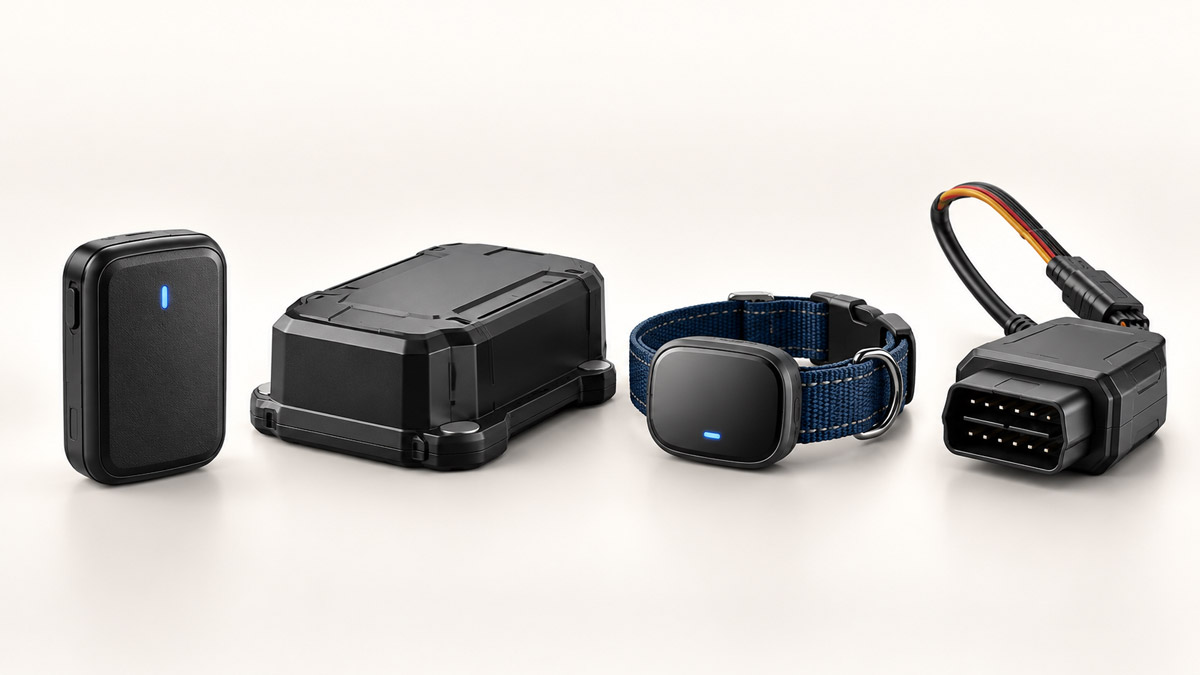
Most portable GPS trackers last from a few days to several weeks, depending on the model, battery capacity and tracking settings. The table below gives typical planning ranges rather than guaranteed figures.
| Tracker Type | Typical Battery Life | Main Consideration |
|---|---|---|
| Personal and pet GPS trackers | 1–14 days | Frequent location updates and cellular connectivity |
| Portable vehicle trackers | 1–3 weeks | Battery capacity and tracking frequency |
| Magnetic vehicle trackers | 2 weeks to several months | Sleep modes and reporting intervals |
| Long-life asset trackers | Several months to several years | Infrequent reporting and ultra-low-power operation |
| Smartwatch and kids’ GPS watches | 1–2 days in regular use | Screen activity, GPS use and connectivity |
| Bluetooth tracking tags | Around 1 year or more | Rely on nearby phones rather than built-in GPS |
| Hardwired or OBD-II vehicle trackers | Continuous while powered | Vehicle power supply rather than internal battery |
These categories overlap. A magnetic tracker reporting every minute may last only days, while the same model using infrequent check-ins could last months.
Why Do Some GPS Trackers Last Longer Than Others?
The biggest factor is usually how often the device determines and reports its location. Battery capacity sets how much energy is available; power consumption decides how quickly it’s used up.
1. Location Update Frequency
Each update typically involves waking the GPS receiver, getting a position fix and sending it to a server or app. More frequent updates mean more of these power-hungry cycles.
A vehicle tracker reporting every minute, for example, may need recharging within days or weeks. Switch it to every 30–60 minutes and it may last considerably longer, although the exact gain depends on how the device manages power between updates.
2. Signal Strength and Network Technology
A tracker needs satellite signals to fix its position and, for connected models, a mobile network to send it. Underground car parks, dense city centres and remote areas can all weaken reception, and a tracker struggling for signal spends longer searching and retrying, which drains the battery faster. For vehicles, where you install the tracker in a car makes a real difference.
Network technology matters too. Trackers built for low-power cellular standards such as LTE-M or NB-IoT can rest in power-saving states between transmissions, which is one reason some asset trackers last for years.
3. Battery Capacity and Device Efficiency
Battery capacity, measured in milliamp-hours (mAh), shows how much charge a battery can store. More capacity helps only if power consumption is similar: a well-optimised tracker with a smaller battery can outlast a less efficient model with a larger one.
4. Temperature and Additional Features
Cold temperatures temporarily reduce the usable capacity of lithium batteries, while sustained heat accelerates long-term degradation. Features such as frequent motion checks, tamper alerts and extra sensors also add to power consumption, depending on how often they run and how efficiently the tracker manages them.
Battery Life by Tracking Mode
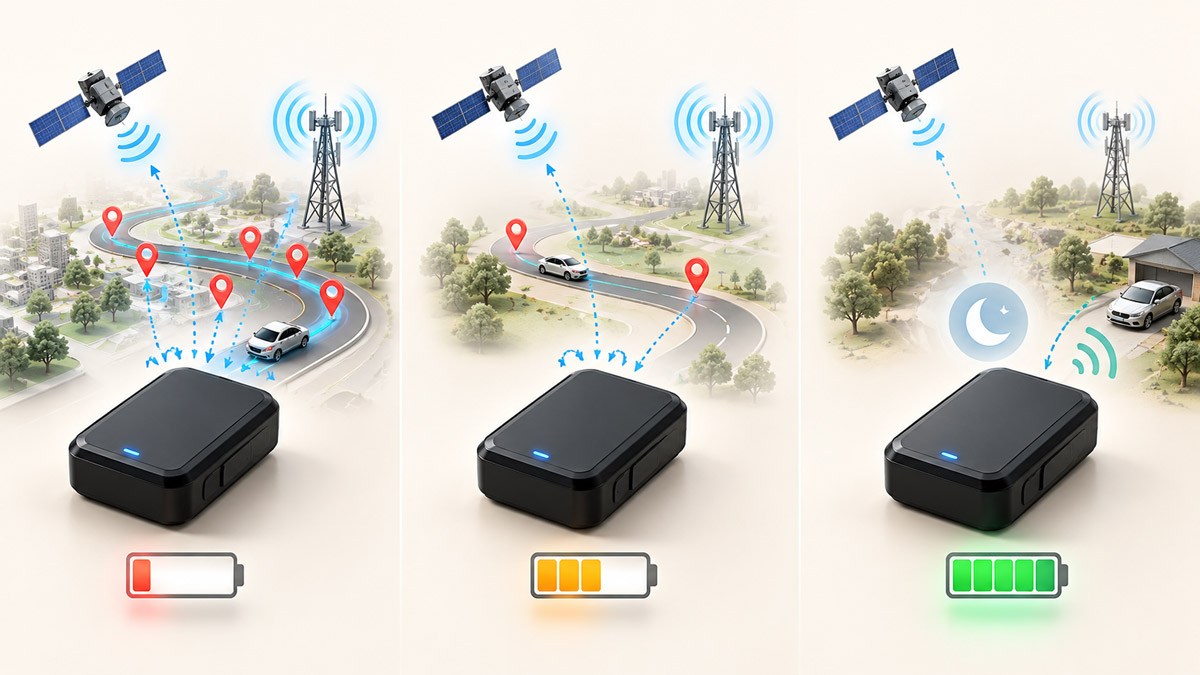
Two identical trackers can deliver very different results depending on how they’re set up, which is why advertised battery figures often seem inconsistent.
| Tracking Mode | How It Works | Expected Effect on Battery |
|---|---|---|
| Continuous or frequent tracking | Reports location at short intervals, especially while moving | Highest consumption |
| Periodic tracking | Checks and reports location at set intervals | Moderate consumption |
| Motion-activated tracking | Increases activity when movement is detected | Can reduce consumption during inactivity |
| Deep-sleep mode | Minimises activity and wakes for scheduled checks or detected events | Often the lowest consumption |
Deep-sleep mode suits vehicles, equipment and other assets that stay stationary for long periods. The trade-off is that updates or alerts may be delayed, and some devices need a moment to wake before they can acquire a new position.
How Long Does a GPS Tracker Last in Real-World Use?
A Car Driven Every Day
If you want frequent location updates, trip history and theft alerts, expect to recharge a portable tracker every one to three weeks, depending on how often the car moves and how often the tracker reports.
A hardwired or OBD-II tracker is often more practical because it draws power from the vehicle and runs continuously while connected, though it may still have a backup battery that needs attention.
A Vehicle Parked for Months
A classic car or seasonal vehicle suits a tracker with motion detection and deep sleep. If the device spends most of its time asleep and checks in occasionally, battery life can stretch to several months.
Hardwired trackers are an option too, but they draw a small current from the car’s battery. On a vehicle left unused for weeks, choose a model with a low-power sleep mode so the tracker doesn’t contribute to a flat battery. Either way, check how it responds to movement, towing and low battery before relying on it.
A Pet or Personal Tracker
Pet trackers and personal safety devices prioritise frequent updates, and their small size limits battery capacity, so daily or weekly charging is common. GPS watches for children, with a screen, calling features and regular location checks, often need charging every day or two. A power-saving zone or adjustable reporting interval can stretch battery life without giving up frequent updates when they matter.
Do Bluetooth Tags Have Longer Battery Life Than GPS Trackers?
Bluetooth tags used as key and luggage finders often run for around a year or longer on a single battery, but they aren’t directly comparable with GPS trackers.
A GPS tracker works out its own position from satellite signals and usually sends it over a mobile network, which is why most need a SIM card or eSIM. A Bluetooth tag simply broadcasts a short-range signal and relies on compatible phones nearby to report where it is. That makes it far more power-efficient but less independent: it works well where plenty of phones are around, while a GPS tracker reports location wherever the item is. Our comparison of AirTag, Tile and Samsung SmartTag explains how the main Bluetooth networks differ.
How to Make Your GPS Tracker Battery Last Longer
- Increase the reporting interval: Use slower updates when second-by-second tracking isn’t needed.
- Enable power-saving modes: Let the tracker sleep when an asset is stationary, if the device supports it.
- Use motion alerts strategically: Step up tracking when movement matters rather than running at full intensity all the time.
- Avoid temperature extremes: Limit prolonged exposure to heat or cold where possible.
- Keep firmware updated: Manufacturer updates can improve power management and reliability.
- Monitor battery health: Watch for low-battery alerts and unusually rapid discharge.
Each of these involves a trade-off. Slower updates save power but give you a less detailed movement history and may delay your awareness of an event, so match settings to what you actually need.
How to Compare GPS Tracker Battery Claims
Don’t rely on the headline battery figure alone. Check the conditions behind it.
- Active tracking versus standby: Does the figure assume frequent updates or occasional check-ins?
- Reporting interval: Are updates every few seconds, minutes or hours?
- Battery capacity: Compare capacity alongside the device’s features and power consumption.
- Signal conditions: Does the estimate assume strong GPS and cellular reception?
- Charging requirements: How often can you realistically recharge the tracker?
- Power source: Would a rechargeable, replaceable or vehicle-powered option suit you best?
A tracker advertised to last six months may only achieve that with infrequent updates and long sleep periods, while one rated for two weeks may report far more often. Neither figure means much without its operating conditions.
Frequently Asked Questions
Can a GPS tracker last for a year?
Yes, some specialist low-power asset trackers can run for a year or longer. They combine large batteries, efficient network technology and infrequent reporting, which is why they’re widely used on trailers, containers and construction equipment. It isn’t realistic for a portable tracker giving frequent real-time updates.
Does a GPS tracker keep working when its battery dies?
No. A battery-powered tracker stops reporting once the battery is depleted, although some models retain previously recorded data. Most send a low-battery alert beforehand, so make sure those notifications are switched on. A vehicle-powered tracker keeps working as long as its power supply does.
Does frequent charging damage a GPS tracker’s battery?
Rechargeable batteries gradually lose capacity with age and use, and heat speeds this up. Following the manufacturer’s charging guidance and avoiding excessive heat will help preserve battery health.
Which GPS tracker has the longest battery life?
Long-life asset trackers designed for infrequent reporting generally last longest among self-contained GPS devices. The best choice, though, depends on whether you need occasional location checks, frequent vehicle updates or continuous personal tracking.
Conclusion
GPS tracker battery life depends less on a single advertised number than on how the device is designed and used. Start with the reporting frequency you genuinely need, not the longest battery claim. If continuous tracking is essential, a vehicle-powered option is usually the most reliable; if the tracker will sit stationary for long periods, prioritise efficient sleep modes and long-life battery performance.