

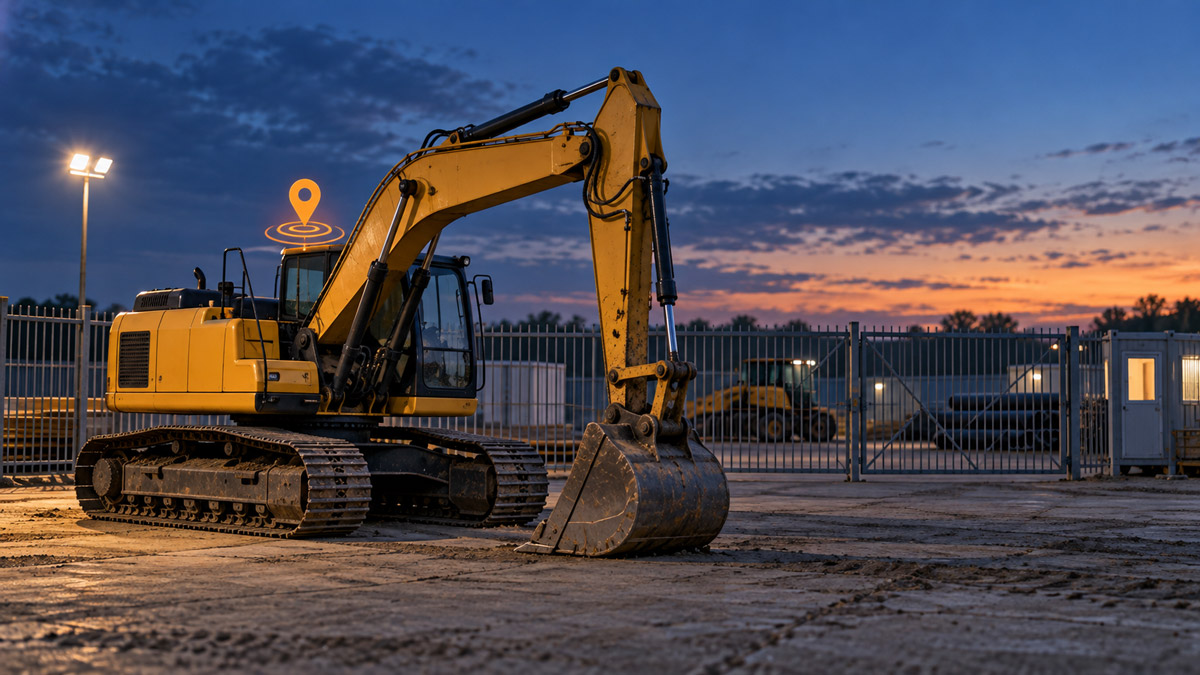
A stolen excavator costs far more than the machine itself. By the time a crew arrives and finds the compound empty, the company is usually facing hire costs for a replacement, lost working hours, a slipped programme, and an insurance claim that may take months to settle.
That is why construction equipment tracking has become more than a way to see where machinery is parked. With the right GPS asset tracker, a company can detect unauthorised movement, receive an alert, respond sooner, and hand usable location information to police during recovery.
One distinction matters from the outset: GPS tracking does not make plant impossible to steal. It makes unauthorised movement much harder to miss, and it shortens the gap between theft, detection and response.
What Is Construction Equipment Tracking?
Construction equipment tracking uses a GPS-enabled device fitted to machinery or other valuable assets. The tracker works out its position and sends that information over a mobile network to a tracking platform, where managers can view it from a phone or laptop instead of relying on manual checks or waiting for someone on site to notice a machine has gone.
How GPS asset tracking works
- A tracker is fitted to the equipment.
- The device establishes its location using GPS.
- That location is transmitted to the tracking platform.
- The platform displays the asset’s position and triggers alerts based on rules you set.
The last step is what turns tracking into theft protection. A tracker that only shows a dot on a map is far less useful than one that tells someone when a machine starts behaving unexpectedly.
GPS tracking vs. equipment telematics
GPS tracking answers a location question: where is the asset? Telematics goes further, collecting engine status, operating hours, diagnostics and utilisation data — valuable for maintenance and billing, but not the priority if security is the reason you are buying.
Worth knowing: much modern plant leaves the factory with telematics already fitted, and those units sit in predictable places that experienced thieves know to look for. Many operators therefore add a second, covertly installed tracker rather than relying on the OEM system alone.
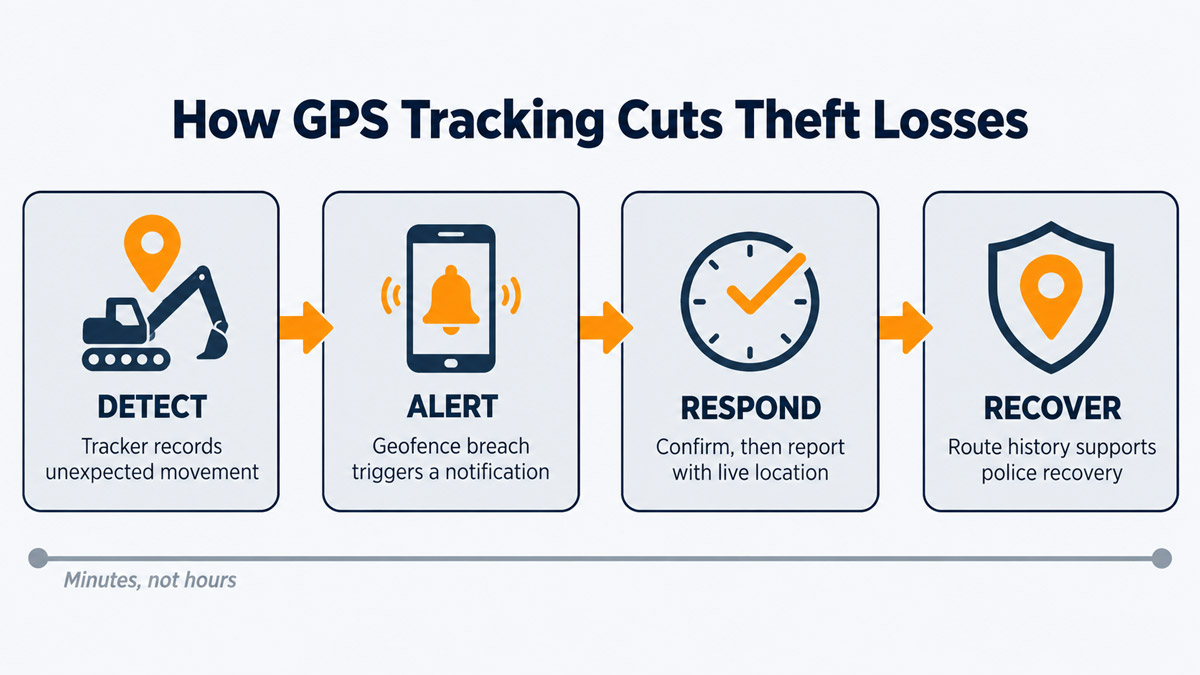
How GPS Tracking Cuts Theft Losses
The financial value of a tracker comes from what happens after suspicious movement is detected:
Detect → Alert → Respond → Recover
1. Detect unauthorised movement
Without tracking, a Friday-night theft may not surface until Monday morning. That leaves a wide information gap — nobody knows when the machine went, which route it took, or how much of a head start the thieves have. A tracker creates a movement record instead. If plant that should be parked in a compound starts moving, that activity can be checked straight away.
2. Get alerts when equipment leaves a safe area
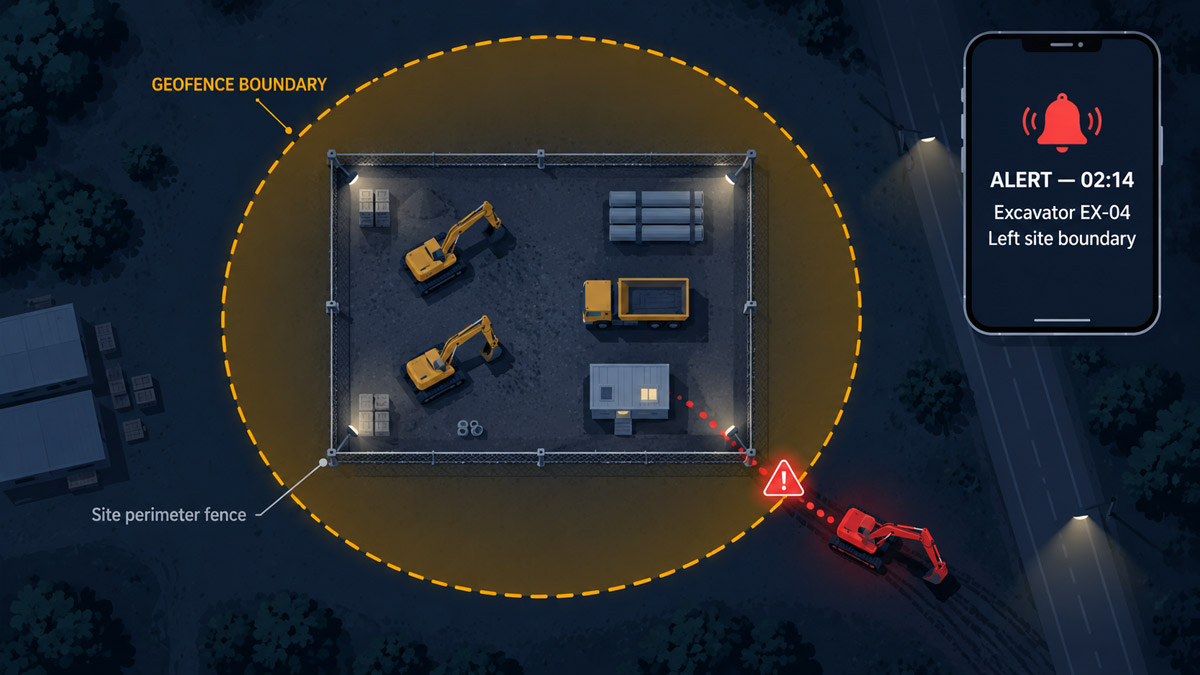
Geofencing lets you draw a virtual boundary around a site, yard or storage compound. When a tracked asset crosses it, the platform sends an alert.
Take an excavator parked inside a secured compound overnight. If it crosses the boundary at 2am, an alert can put that movement in front of someone while it is happening, rather than eight hours later. Set the boundary with a little tolerance, though — a geofence drawn tight to the compound fence will fire every time GPS drift nudges the machine a few metres, and alerts that cry wolf get ignored.
3. Respond while the equipment is still moving
Early notification matters because a useful response depends on current information. Once unauthorised movement is confirmed, check the asset’s live position and recent history, then report it — with the tracking data — so police have something concrete to work with. In the UK, plant theft is coordinated nationally by the Plant and Agricultural National Intelligence Unit, and a crime reference number is normally needed before an insurer will progress a claim.
This is not an invitation to recover equipment yourself. Location data exists to help site managers, security providers and police act on accurate information, not to send staff after strangers in the dark.
4. Improve the chances of recovery
A missing machine is hard to trace when all anyone can say is that it was last seen on site. Tracking data gives responders a starting point: current or recent position, route history, speed and direction. The faster reliable information reaches them, the less time is spent establishing where the asset went — and stolen plant often moves quickly toward a container or a port.
A Real-World Example: What Happens When an Excavator Is Stolen?
An excavator is left on site at the end of the working day. Overnight, someone moves it beyond the geofenced boundary. The tracker detects the movement and sends an alert. The manager checks the platform, confirms the machine should still be on site, and sees the route it has taken since it left.
Instead of discovering an empty compound the next morning and starting from nothing, the company has early warning and actionable location information — which supports a faster report and a better-informed recovery effort. The same principle applies to plant borrowed without permission rather than stolen outright: early detection catches misuse before it turns into a larger loss.
Which Construction Equipment Should You Track First?
Not every company needs the same approach. A sensible starting point is to prioritise assets that are high-value, mobile and regularly left unattended.
High-value heavy machinery
- Excavators
- Skid steers
- Bulldozers
- Telehandlers and dumpers
- Cranes
These cause the most disruption when they vanish, because hiring a replacement hits both the budget and the programme.
Smaller and unpowered assets
- Trailers
- Generators
- Compressors
- Welders and power tools
Small kit is easy to overlook and easy to lift, yet a van-load of it is expensive to replace. A strategy that protects only the excavators leaves an obvious gap. which makes them unreliable on rural sites. GPS remains the better option for anything you would genuinely miss.
Choosing the Right GPS Tracker for Construction Equipment
The right device depends on what you are protecting and how it is powered.
Powered equipment
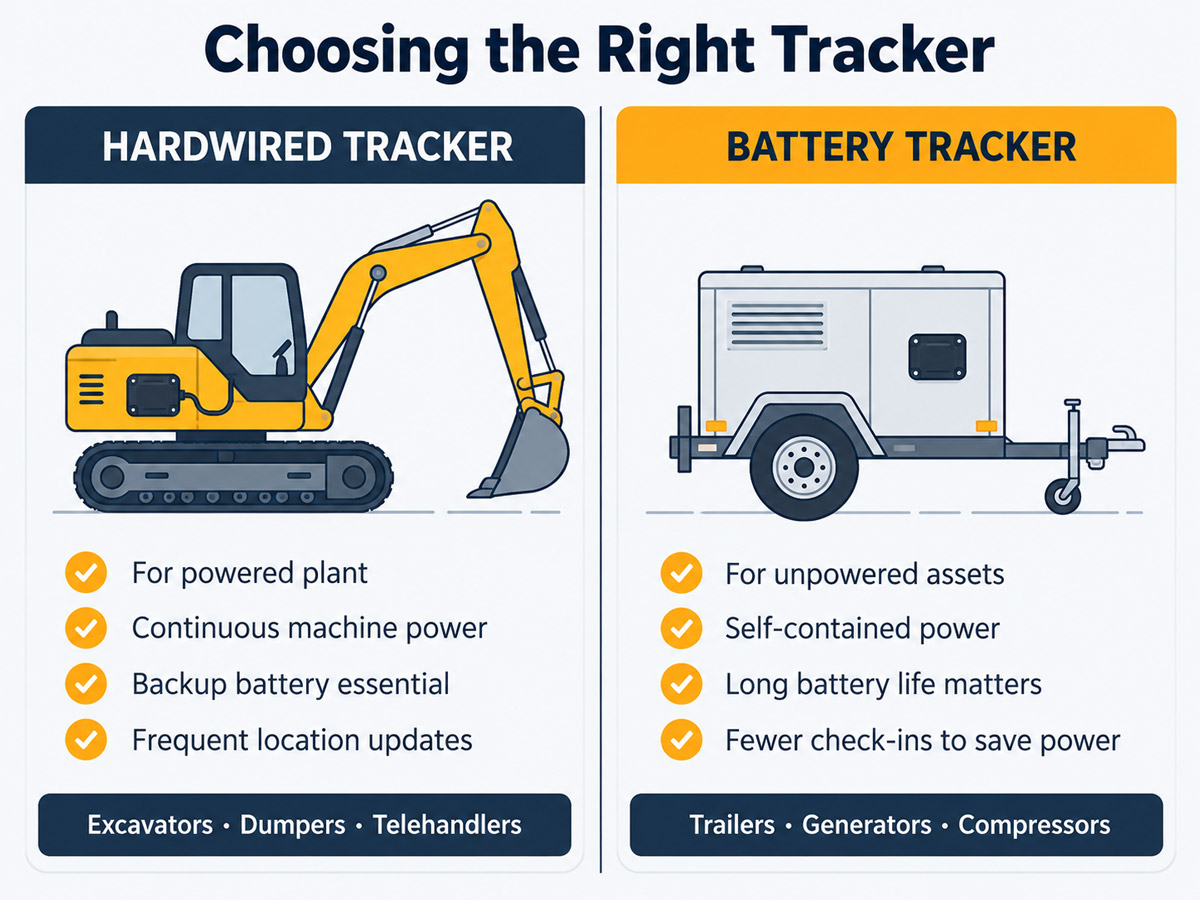
Machinery with a reliable electrical system suits a hardwired tracker, which draws continuous power in normal operation. Insist on a backup battery: cutting the machine’s main power is one of the first things a thief will try, and it should not end tracking.
Unpowered equipment
Trailers, generators and similar assets need a battery-powered tracker. Long battery life matters more here, because the device may sit unattended for months between checks.
Features that matter most
- Geofencing: detects movement outside approved areas.
- Tamper alerts: warn when someone interferes with the device or its power supply.
- Battery life: critical for unpowered assets.
- Rugged build: look for a sealed IP-rated housing that copes with dust, water and constant vibration.
- Connectivity: reliable mobile coverage is what makes updates timely. Check whether the device ships with data included or whether you need to supply your own SIM card, as this affects both setup and running costs.
- Update frequency: frequent pings help during an incident but drain batteries; many trackers switch to faster reporting only once movement is detected.
- Simple software: whoever manages the fleet has to be able to edit geofences and alerts without training.
Budget for the subscription as well as the hardware. Ongoing fees usually outweigh the upfront device cost over a few years, so it is worth understanding how GPS fleet tracking costs break down before committing to a provider.
GPS Tracking vs. Traditional Security Measures
Tracking works best as one layer of site security, not a replacement for the rest.
| Security measure | Main role |
|---|---|
| Fencing | Restricts physical access to the site |
| Locks and immobilisers | Make unauthorised use harder |
| Cameras | Monitor activity and record evidence |
| CESAR security marking | Proves ownership and makes stolen plant harder to resell |
| GPS tracking | Detects movement and supports location-based response and recovery |
Each layer does a different job. A fence slows entry, cameras provide evidence, marking undermines resale value, and a tracker tells you whether an asset actually moved and where it went.
Common Mistakes When Tracking Construction Equipment
- Tracking only the biggest machines: portable kit is stolen far more often.
- Fitting the tracker somewhere obvious: a device found in the first minute protects nothing.
- Ignoring power requirements: the wrong tracker creates avoidable battery and installation problems.
- Setting alerts nobody owns: decide in advance who receives out-of-hours alerts and what they do next.
- Never testing the system: check batteries, coverage and alert delivery periodically, not after a theft.
- Treating tracking as a replacement for security: it complements locks, fencing and marking rather than replacing them.
The Limits of GPS Tracking
Good tracking is not about promising perfect protection. It reduces uncertainty and gets useful information to the right people sooner. What it cannot do is:
- Prevent every theft
- Maintain uninterrupted communication everywhere, including containers and underground car parks
- Guarantee recovery
- Replace locks, fencing, cameras or marking
Frequently Asked Questions
Can GPS tracking work if a machine’s main battery is disconnected?
Many commercial trackers include an internal backup battery so the device keeps reporting after external power is cut. Runtime varies by model, so check the specification rather than assuming.
What happens when equipment enters an area without mobile coverage?
Better trackers store positions while offline and upload them once connection returns, so the movement history survives the gap instead of disappearing.
Can GPS trackers be used on trailers and other unpowered assets?
Yes. Battery-powered asset trackers are built for exactly this. Balance battery life against update frequency when choosing one.
How often does a construction equipment tracker update its location?
It depends on the device, configuration and power source. Hardwired units on powered plant can report frequently, while battery-powered assets typically check in less often and increase their reporting rate once movement is detected.
Can GPS tracking help reduce insurance costs?
It may support your risk case, and some insurers require tracking or CESAR marking as a condition of cover on high-value plant. Treatment varies by provider and policy, so confirm any discount or requirement directly with your insurer or broker.
Conclusion: Make Equipment Theft Easier to Detect and Harder to Ignore
The real advantage of construction equipment tracking is not knowing where a machine is. It is closing the gap between unauthorised movement and a meaningful response.
Geofences, movement alerts, suitable hardware, physical security and a clear escalation process work as a system. The practical next step is to list the assets that would be most costly or disruptive to lose, and build your tracking strategy around those first.