

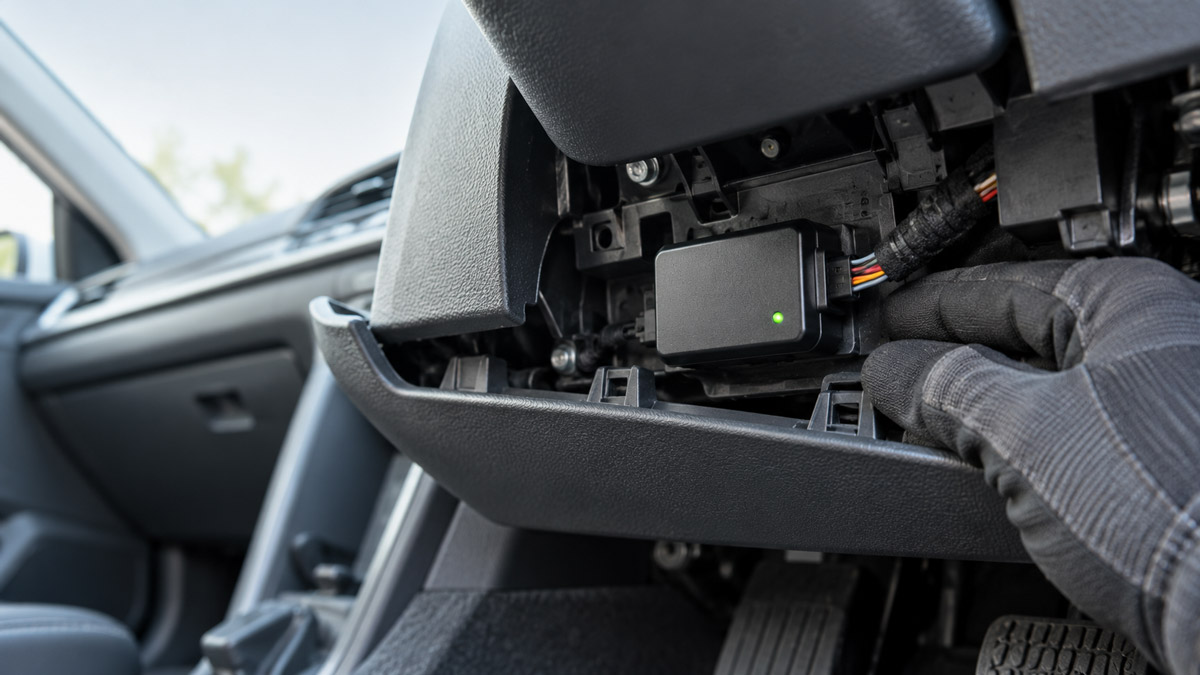
The most hidden place for a GPS tracker is rarely the best place for its signal. A device can be perfectly concealed and still struggle to fix its position or send updates if the metal, heat and wiring around it get in the way.
A good installation does four things at once: it lets the tracker receive satellite signals, keeps a usable mobile connection for sending that location to your app, stays physically safe, and remains powered. In most cars the dashboard area is the best starting point, but the right answer depends on the tracker, the vehicle and how permanent you want the installation to be.
What Makes a Good GPS Tracker Location?
Satellite reception
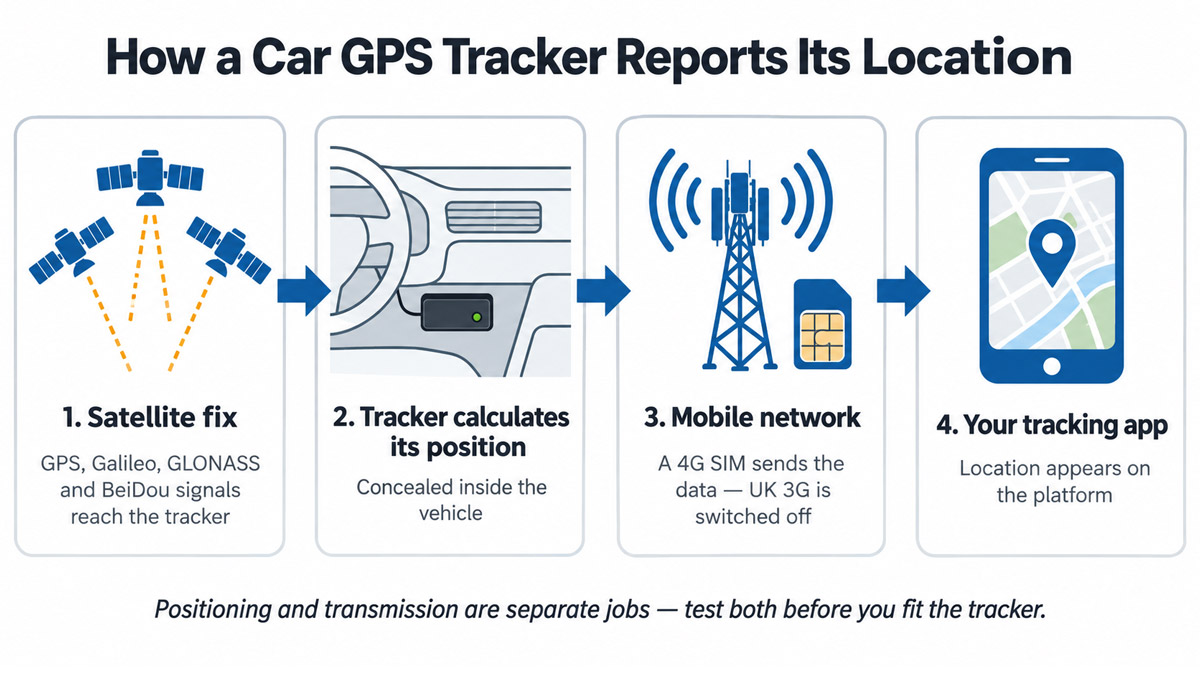
Trackers work out where they are by receiving signals from navigation satellites overhead. Most current units are multi-constellation, using GPS alongside Galileo, GLONASS or BeiDou, which makes them noticeably better at holding a fix in built-up areas than older GPS-only devices.
Those signals are still weak by the time they reach the ground, so obstruction matters. Glass and plastic pass them reasonably well; thick metal does not. That is why positions under plastic trim or near a window tend to perform well while fully enclosed metal cavities cause problems. One exception catches people out: some cars have heated or metallised (athermic) windscreens whose coating weakens satellite reception, which is why they usually include a small uncoated patch behind the mirror for toll tags and navigation aerials.
Mobile network connectivity
Positioning and transmission are separate jobs. The tracker calculates its location from satellites, then uses a mobile data connection, and a SIM, to push that location to your tracking platform. A spot that fixes position quickly can still be a poor choice if the cellular signal there is weak, so test both.
Worth checking before you blame placement: 3G has now been switched off across all UK networks, and 2G is being retired between 2029 and 2033. An older 2G or 3G-only tracker may have nothing left to connect to, wherever you mount it. Our guide to whether a GPS tracker needs a SIM card covers how the data side works.
Safety, power and access
Keep the device and its wiring clear of airbag deployment paths, pedals, seat rails, steering components, hot exhaust parts and anything that moves. Then think about power. A hardwired unit needs suitable vehicle wiring and stays live indefinitely, while a battery model can go almost anywhere but has to be reachable for charging. A tracker buried somewhere you can only reach by stripping half the dashboard is a tracker you will stop maintaining.
The Best Places to Install a GPS Tracker Inside a Car
Behind the dashboard: best overall
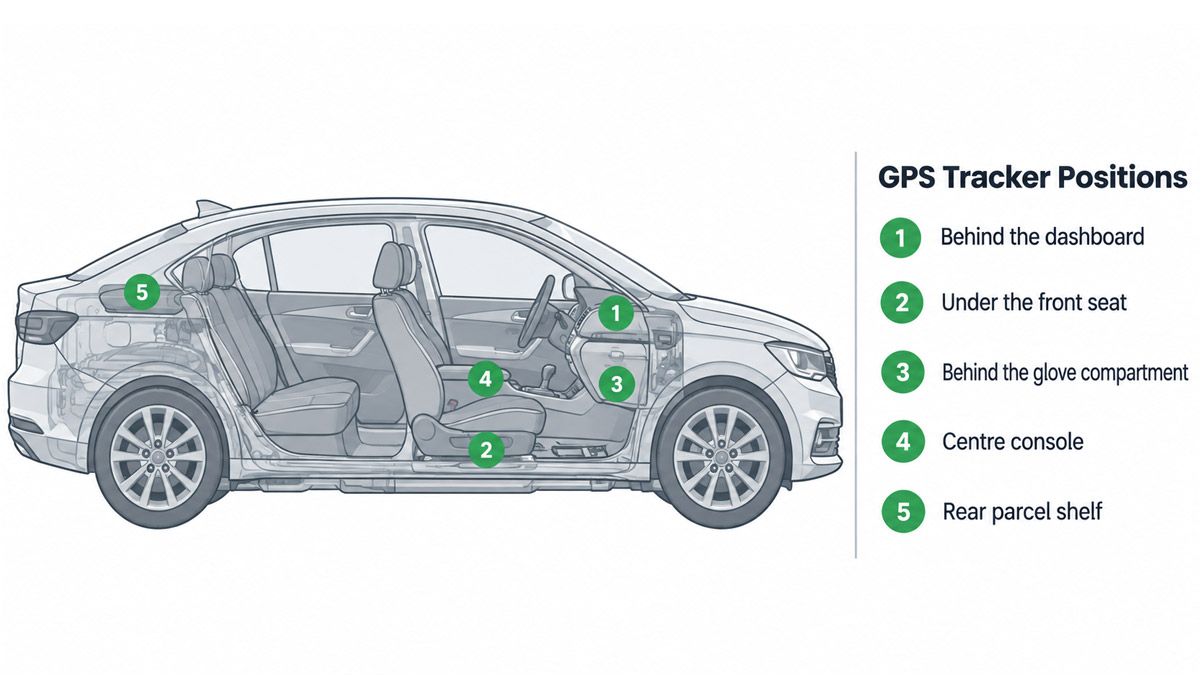
The dashboard area usually wins because it combines concealment, protection from the weather and easy access to the vehicle’s electrical system. A hardwired tracker fitted behind non-metallic trim can stay completely out of sight while still holding a solid fix.
It is not automatically right in every car, though. Avoid pockets surrounded by heavy bracketry or shielded wiring looms, and never place a device where it could interfere with an airbag or other safety system.
Under the front seats: best for compact battery trackers
The space beneath a front seat gives decent concealment with no wiring work, which suits a small battery-powered unit. Run the seat through its full travel before committing: the tracker must be fixed firmly enough that it cannot slide into the seat mechanism or end up under the driver’s feet.
Behind the glove compartment
Removing the glovebox liner often reveals a usable cavity with wiring close by, making this a sensible middle ground between discretion and access. Note the distinction, though. Behind the compartment, not inside it. The glovebox itself is one of the first places anyone looks.
Centre console and rear parcel shelf
A slim battery tracker can sit inside a console cavity, and in saloons and hatchbacks the area around the rear parcel shelf keeps the device close to glass with good sky exposure. Test both rather than assuming: a console that works in one model may be lined with metal in another.
External Locations for Waterproof Magnetic Trackers
Exterior mounting gives excellent sky exposure but only makes sense for devices built for it. Check the IP rating first, because water ingress, road salt, grit and stone impact all become real risks.
- Inside a plastic bumper: strong concealment, and signals pass through the plastic skin easily. Keep it clear of parking sensors, crash structure and anything that gets hot.
- A protected underbody or chassis section: open exposure to the sky and simple magnetic mounting. Stay away from the exhaust, suspension and moving parts, and check the mount periodically rather than assuming it will hold.
- Wheel-well areas: well hidden, but the harshest environment on the car. A fallback option, and only with a properly sealed device mounted behind protection.
Magnetic units are also the usual choice for equipment that moves between vehicles, which is the same approach used for tracking construction plant against theft.
Where to Install Based on Tracker Type
| Tracker type | Good starting location | Main advantage | Main consideration |
|---|---|---|---|
| Hardwired | Dashboard or behind interior trim | Long-term power and concealment | Requires careful wiring and safe installation |
| Battery-powered | Under a seat or inside the console | Flexible placement | Battery access and recharge interval |
| OBD-II | OBD-II port | Fast, plug-and-play setup | Usually easier to spot |
| Waterproof magnetic | Protected bumper or suitable underbody area | Flexible external mounting | Weather, dirt and mounting security |
Hardwired trackers suit permanent installations where you never want to think about charging, and the dashboard gives power access and concealment in the same place. For complex vehicle electronics, or several vehicles at once, professional installation is the safer route and worth factoring into the full cost of fleet tracking.
Battery trackers are the easiest to experiment with, since you can try three positions in an afternoon before settling on one. OBD-II models are the fastest to fit because power comes straight from the diagnostic port, but that port is a known location, so they trade stealth for convenience.
Bluetooth tags are not a substitute. AirTag, Tile and Samsung SmartTag devices rely on passing phones rather than their own satellite fix, so placement works differently for them.
How to Test the Signal Before Securing It
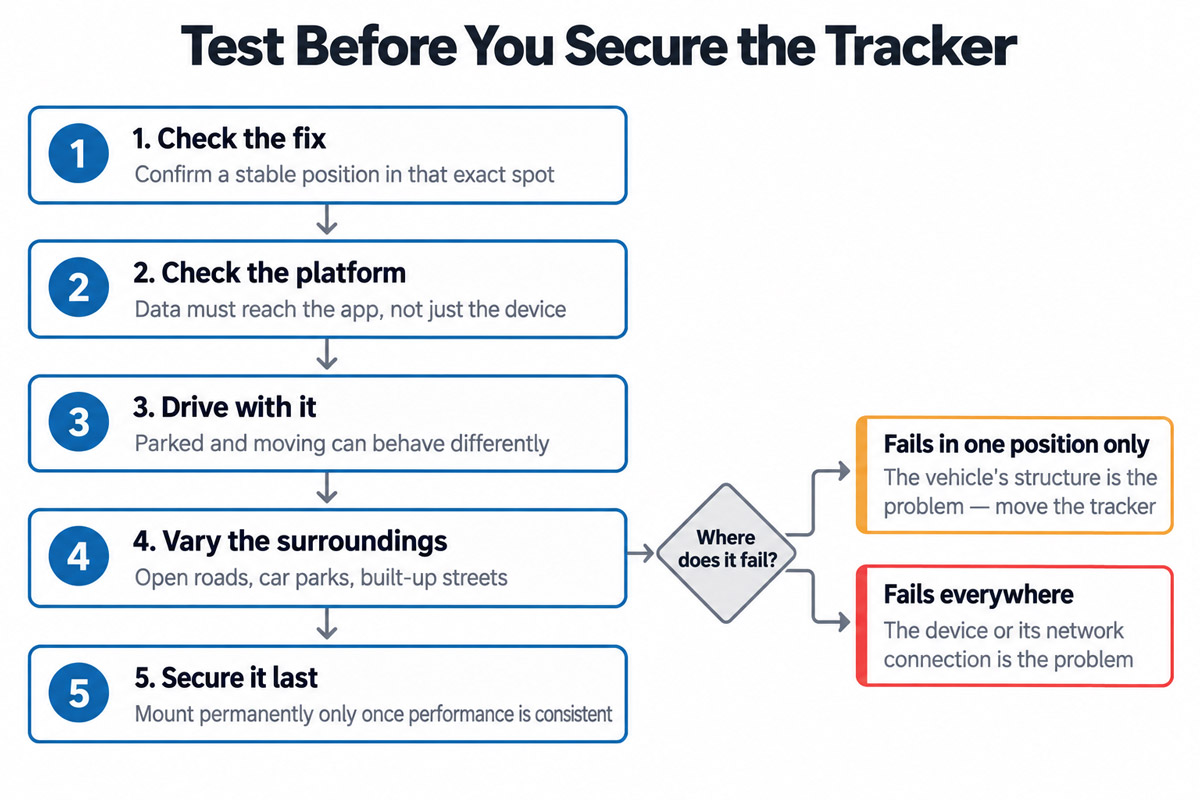
Do not mount a tracker permanently just because the location looks promising.
- Check the fix: confirm the tracker acquires a stable position in that exact spot.
- Check the platform: make sure location data is arriving in the app, not just being calculated on the device.
- Drive with it: a position that behaves while parked can perform differently once the car is moving.
- Vary the surroundings: test in open areas as well as multi-storey car parks and streets hemmed in by buildings.
- Secure it last: fix the device permanently only once performance has been consistent.
This also isolates the fault. If a tracker fails in one position but works in another, the vehicle’s structure is the problem. If it fails everywhere, the device or its network connection is.
Locations to Avoid
- Fully enclosed metal spaces: heavy shielding obstructs satellite reception.
- Engine bays and exhaust areas: sustained heat shortens the life of the electronics and the battery.
- Moving mechanical components: suspension, belts, hinges and seat rails.
- Airbag deployment paths: never fit a device where it could interfere with a safety system.
- Pedal and steering areas: neither the tracker nor its wiring should be able to reach the controls.
- Unprotected exterior spaces: only for devices rated for the conditions.
Common Placement Mistakes
- Prioritising concealment over signal. The best hiding place is worthless if the tracker cannot report from it.
- Ignoring orientation. Many trackers have a preferred antenna direction, so follow the manufacturer’s instructions rather than guessing.
- Leaving it loose. Vibration and seat adjustment will move an unsecured device out of the position you tested.
Before You Fit a Tracker to Someone Else’s Car
Placement is a technical question; permission is a legal one. Tracking your own vehicle, or a company vehicle with staff properly informed, is straightforward. Fitting a tracker to a car you do not own or control, such as a partner’s or an adult family member’s, can breach UK data protection law and in some circumstances amount to harassment. If the vehicle is not yours, get consent first.
Frequently Asked Questions
What is the best place to install a GPS tracker in a car?
The dashboard area is the strongest all-round choice, because it combines concealment, protection and access to power. The exact position still needs testing, since vehicle construction varies.
Does a GPS tracker need to be near a window?
No. Plenty of trackers work well from concealed interior positions. What matters is avoiding heavy metal obstruction and confirming performance where you intend to fit it.
Can a GPS tracker work under a car?
Yes, if the device is rated for exterior use. An underbody position has excellent sky exposure, but the seal and the mounting both need to cope with water, salt and debris.
How can I tell whether my tracker has a strong signal?
Check that it acquires an accurate position consistently, sends updates reliably to its platform, and keeps doing both while the car is moving.